Overseas Cancer Referral: How to Prepare Core Medical Records and Biomarker Reports
When facing a complex or advanced cancer diagnosis, many families and medical facilitators look beyond their local borders to access top-tier precision oncology resources—such as CAR-T cell therapy, proton therapy, or advanced biological immunotherapy.
However, the biggest hurdle in cross-border medical care is rarely securing a visa or booking a flight. The true bottleneck is disorganized clinical data. When an overseas specialist receives a chaotic, incomplete pile of translated medical notes, they cannot make an accurate preliminary assessment. To ensure a swift and successful cancer referral, preparing a structured, comprehensive medical file is non-negotiable.
Here is exactly what you need to prepare before initiating an overseas clinical review.
1. The Foundation: Pathology and IHC Reports
The absolute gold standard for any cancer diagnosis is the pathology report. An overseas oncologist cannot legally or ethically recommend a treatment plan based on a doctor’s summary note; they must see the definitive tissue diagnosis.
- Pathology Report: This confirms the exact type of cancer, its grade (how aggressive the cells look), and its origin.
- Immunohistochemistry (IHC): Often included with or following the pathology report, IHC testing looks for specific proteins on the cancer cells. For example, knowing the HER2 status in breast or gastric cancer, or the Ki-67 proliferation index, is vital for determining the initial targeted treatment pathways.
2. The Key to Precision Oncology: Biomarker and Genomic (NGS) Reports
In the modern era of precision oncology, simply knowing a patient has “lung cancer” or “colon cancer” is no longer enough. Tumors are now treated based on their unique genetic fingerprints.
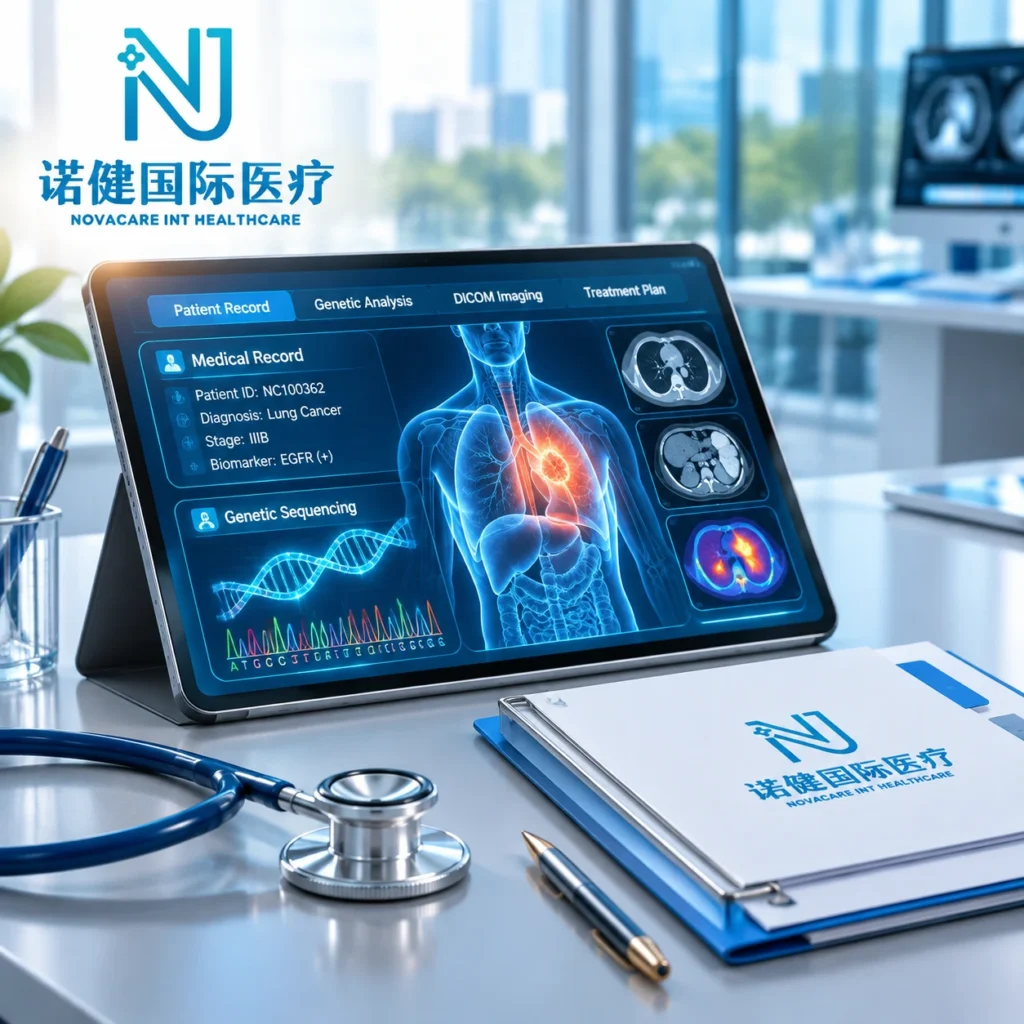
If the patient is seeking targeted therapy or biological immunotherapy, you must provide comprehensive Next-Generation Sequencing (NGS) reports. Specialists will specifically look for:
- Driver Mutations: Such as EGFR, ALK, ROS1, or KRAS.
- Immunotherapy Biomarkers: PD-L1 expression levels, Tumor Mutational Burden (TMB), and Microsatellite Instability (MSI-H) status.
- Emerging Targets: Such as Claudin18.2 for advanced gastric cancer referrals seeking CAR-T clinical trials.
3. Visualizing the Threat: Original DICOM Imaging Files
A common mistake made by patients and medical agencies is sending only the printed paper radiology reports. A written summary of a CT scan is essentially one radiologist’s subjective opinion.
Overseas surgical and interventional oncologists must see the actual images to evaluate exactly how the tumor is wrapping around major blood vessels or pressing against critical nerves.
- DICOM Format: You must obtain the original, uncompressed imaging files (CT, MRI, or PET-CT) burned onto a CD or USB drive in DICOM format. These raw files allow overseas specialists to reconstruct the images in 3D and accurately plan minimally invasive surgeries or radiation dosimetry.
4. The Treatment Timeline: Surgical, Chemo, and Medication History
For patients with advanced or recurrent cancer, the history of what has already been tried is just as important as the current diagnosis. You must prepare a clear chronological timeline:
- Surgical History: Dates of previous tumor resections and the post-operative pathology results.
- Systemic Therapies: A detailed list of all chemotherapy regimens (e.g., FOLFOX, paclitaxel), targeted pills, and immunotherapies the patient has taken.
- Lines of Resistance: It is crucial to note exactly when a specific drug stopped working (disease progression) and what side effects the patient experienced.
- Current Status: The patient’s current Performance Status (ECOG score), recent blood work (liver and kidney function), and a list of underlying conditions like diabetes or hypertension.
5. The Danger of Unstructured Data in Medical Tourism
When medical records are disorganized or critical genomic reports are missing, the cancer referral process grinds to a halt. Overseas specialists will reject the inquiry or demand new tests upon arrival. This not only wastes tens of thousands of dollars in unnecessary redundant testing but, more importantly, wastes precious time that the patient may not have.
6. Streamlining Cancer Referral with Novacare
Navigating the complexities of international medical record preparation requires professional clinical coordination.
Novacare functions as a dedicated international patient service desk, streamlining the cancer referral process for global patients and medical tourism facilitators. Our medical coordination team performs rigorous “Record Intake.” We help you identify missing documents, translate critical pathology and IHC reports into standardized medical English, and compile a clear Clinical Summary. This ensures that when we present your case to China’s leading multidisciplinary tumor boards (MDT), the specialists have exactly what they need to design a rapid, precise treatment route.
- For Medical Agencies & Partners: Utilize our structured B2B record intake system to seamlessly refer your complex oncology clients to top-tier resources in China.
- For Patients and Families: Start your journey with clarity. Contact the Novacare patient desk to submit your current medical records and discover if an advanced medical travel route fits your situation.
Frequently Asked Questions (FAQ)
Q: Are translated copies of my medical records enough for an overseas referral?
A: Translated summaries are very helpful for a quick overview, but they are not sufficient on their own. You must always provide the original source documents (in your native language) alongside the translations. Overseas medical teams will often verify the original pathology and laboratory values to ensure no critical medical terminology was lost in translation.
Q: How do I get my scans in DICOM format?
A: When you have a CT, MRI, or PET-CT scan, the imaging center stores the raw data in a universal medical format called DICOM. You can simply go to the medical records department of the hospital where the scan was performed and request that they “burn the original DICOM imaging files onto a CD or flash drive” for an external consultation.
Q: How recent do my medical records need to be?
A: For cancer referrals, timing is critical. Your imaging scans (CT/MRI/PET-CT) and routine blood work (liver/kidney function, tumor markers) should ideally be no older than 4 to 6 weeks. Older scans will not accurately reflect the current size and spread of the tumor, making it impossible for a specialist to offer a safe, up-to-date treatment plan. Pathology and genetic testing reports, however, remain relevant even if they are older, as they define the biological nature of the cancer.
Disclaimer: This article is for educational and preparatory purposes only and does not constitute medical advice. A complete and accurate medical record review by licensed oncology specialists is required before any diagnosis, treatment plan, or medical travel decision can be made.