
Because IRE is non-thermal, specialists may review it for lesions near vessels, nerves, bile ducts, pancreatic ducts, or other structures where heat-based ablation can be risky.
Product overview
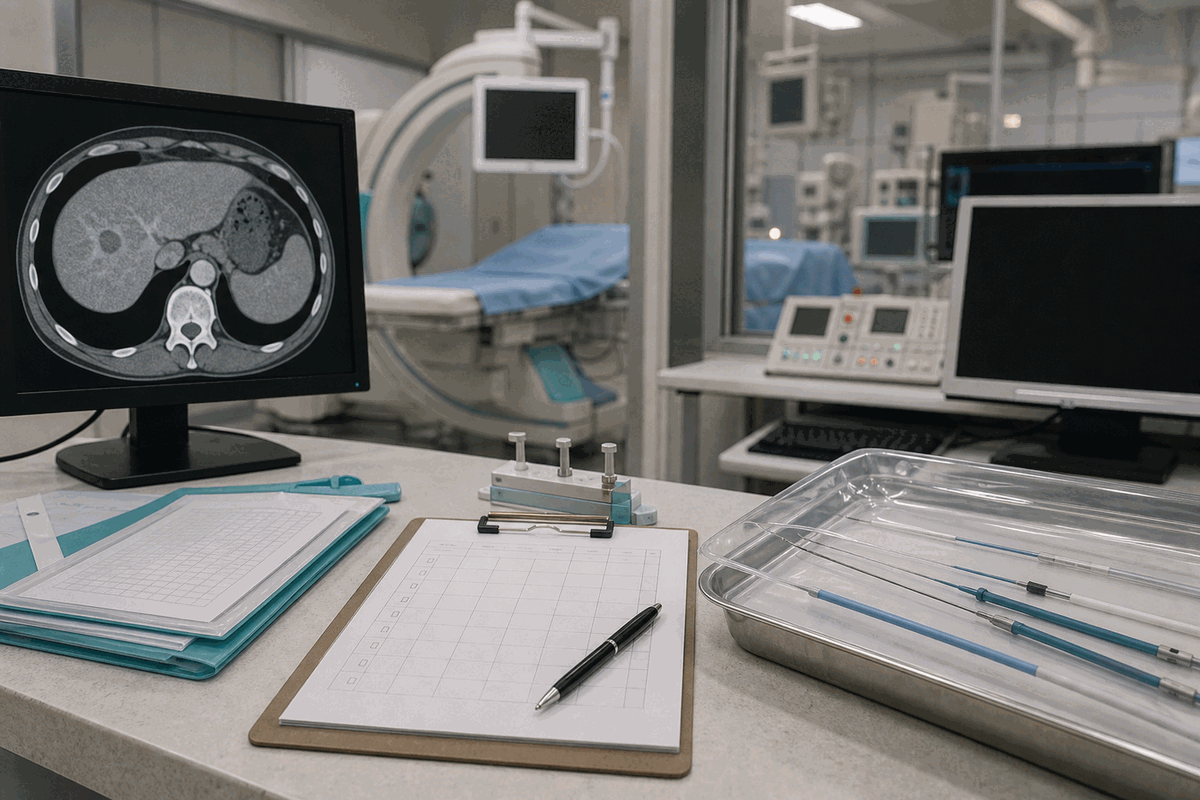
Suitable audience and clinical questions: Locally advanced pancreatic cancer near vessels or bowel, hilar liver tumors, renal hilar tumors, prostate tumors, and selected soft-tissue tumors.
Clinical purpose
NanoKnife, also known as irreversible electroporation (IRE), is a non-thermal ablation technology that uses high-voltage pulsed electric fields to create irreversible nanopores in tumor-cell membranes. The goal is to induce tumor-cell death while preserving heat-sensitive structures in carefully selected cases.
Technology strengths
Planning focuses on whether the treatment field can be shaped around the target with a defined margin while protecting adjacent anatomy.
The ablation energy delivery itself can be brief, but overall suitability still depends on anesthesia, cardiac rhythm, coagulation, infection risk, and organ function.
Clinical scenarios from the treatment matrix
- Locally advanced pancreatic cancer, especially lesions close to major vessels or bowel.
- Hilar liver tumors near the hepatic artery, portal vein, or bile duct.
- Renal hilar tumors near the renal artery or ureter.
- Selected prostate cancer or soft-tissue tumor questions after specialist review.
Records to prepare
Recent CT / MRI and DICOM files, lesion size and location, pathology, staging, liver and kidney function, coagulation results, cardiac history, medication history, and previous local therapy records.
Product content and service items
Non-thermal ablation suitability questions
Critical-structure proximity review
Cardiac and anesthesia safety screening context
Local ablation pathway discussion
Records required before contacting Novacare
Complete records help the patient desk frame the right questions and avoid unnecessary back-and-forth.
Recent CT / MRI reportsDICOM files showing lesion locationPathology and stagingOrgan function, cardiac history, and coagulation resultsPrior ablation, surgery, or radiotherapy records
Service boundary
This page is service information for international patients. Novacare does not diagnose, prescribe, or guarantee treatment outcomes. Eligibility, contraindications, procedure frequency, and final plans depend on licensed physician evaluation.