
What is Biological Immunotherapy? Reconstructing the Cancer Immune Microenvironment
For the better part of a century, the primary weapons against cancer were designed to attack the tumor directly. Surgeons cut it out, radiation burned it, and chemotherapy poisoned it. While effective, these methods often caused immense collateral damage to the patient’s healthy body.
In recent years, oncology has experienced a monumental paradigm shift with the rise of Biological Immunotherapy. Instead of attacking the cancer cells directly, this revolutionary approach does something much more elegant: it awakens, trains, and equips the patient’s own immune system to recognize and destroy the cancer naturally.
1. The Deception of Cancer: How Tumors Hide
To understand biological immunotherapy, we first need to understand why the immune system fails to kill cancer in the first place.
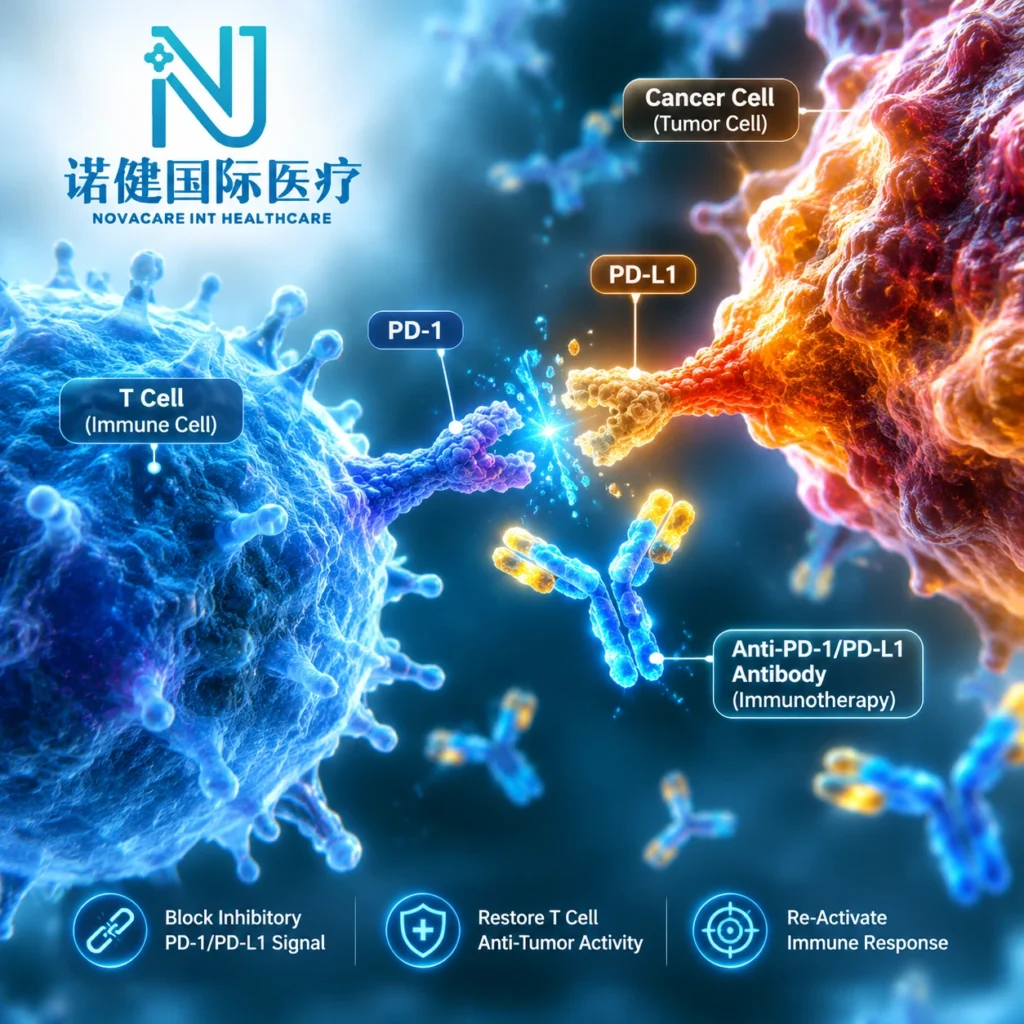
The human body possesses a powerful defense mechanism—primarily T-cells—designed to hunt down and kill abnormal or infected cells. However, cancer cells are masters of disguise. They exploit a natural safety mechanism in the body called “immune checkpoints.”
Think of it as a handshake. T-cells have a receptor on their surface called PD-1. Cancer cells often develop a matching protein called PD-L1. When a T-cell approaches to attack, the cancer cell reaches out and “shakes hands” with the T-cell (the PD-1/PD-L1 connection). This handshake acts as an off-switch. It essentially hypnotizes the T-cell, tricking the immune system into believing the cancer cell is a normal, healthy part of the body.
2. What is Biological Immunotherapy? Unmasking the Threat
Biological Immunotherapy—specifically Immune Checkpoint Inhibitors—works by breaking this deceptive handshake.
These advanced biological drugs (such as PD-1 or PD-L1 inhibitors) act like molecular tape. They bind to either the T-cell’s receptor or the cancer cell’s protein, physically preventing them from connecting. Once the handshake is blocked, the “hypnosis” is broken. The T-cell suddenly recognizes the cancer cell for the deadly threat it is and immediately launches a lethal immune attack.
3. Reconstructing the Tumor Immune Microenvironment (TME)
A tumor is not just a ball of mutated cells; it has its own ecosystem, known as the Tumor Immune Microenvironment (TME).
- Cold Tumors: In many advanced cancers, the TME is heavily suppressed. It builds a microscopic fortress that physically excludes immune cells or neutralizes them upon entry. These are known as “cold tumors.”
- Hot Tumors: The goal of biological immunotherapy (often combined with chemotherapy, targeted therapies, or local ablation) is to reconstruct this microenvironment. By removing immune suppression, the therapy turns a “cold” tumor into a “hot” tumor—an active battlefield swarming with energized T-cells aggressively breaking down the tumor from the inside out.
4. Who Benefits from Biological Immunotherapy?
Biological immunotherapy has produced miraculous, long-term survival responses in patients with advanced, metastatic cancers that were previously considered untreatable. It is highly effective for melanoma, advanced lung cancer (NSCLC), liver cancer (HCC), and certain types of gastric and kidney cancers.
However, it is not a magic bullet for everyone. Before starting treatment, patients must undergo precision biomarker testing. Analyzing the tumor for PD-L1 expression levels, Tumor Mutational Burden (TMB), or Microsatellite Instability (MSI-H) allows oncologists to accurately predict how aggressively the immune system will respond to the therapy.
5. Biological Immunotherapy Consultation with Novacare
Accessing the right immunotherapy protocol requires precise genomic profiling and deeply experienced immunological oncologists.
Novacare is a dedicated international patient service desk, bridging the gap between global patients, medical tourism agencies, and top-tier precision oncology resources in China. We assist by structuring complex pathology and genetic sequencing reports, coordinating remote multidisciplinary tumor board (MDT) evaluations, and organizing comprehensive clinical pathways.
- For Medical Agencies & Partners: Enhance your cross-border medical portfolio by offering your clients expert biological immunotherapy consultations and structured treatment routes for advanced malignancies.
- For Patients and Families: Advanced cancer does not always mean the end of the road. Contact the Novacare patient desk to submit your biopsy and genomic reports for a comprehensive biological immunotherapy feasibility review.
Frequently Asked Questions (FAQ)
Q: Is biological immunotherapy better than chemotherapy?
A: They work differently. Chemotherapy attacks all rapidly dividing cells, which causes severe side effects like hair loss and nausea. Immunotherapy targets the immune system, making it more precise with generally better-tolerated side effects. Often, they are used together; chemotherapy breaks open cancer cells, which helps the immune system (boosted by immunotherapy) recognize the threat more easily.
Q: Does biological immunotherapy work immediately?
A: Unlike targeted pills or chemotherapy, which may shrink a tumor in days, immunotherapy can take time. Because it works by training the immune system, it might take several weeks or a few months to see significant tumor shrinkage on a CT scan. Sometimes, tumors may even appear slightly larger initially as immune cells rush in to attack (a phenomenon known as pseudo-progression).
Q: What are the side effects of biological immunotherapy?
A: Because immunotherapy takes the “brakes” off the immune system, the most common side effects are autoimmune-related. The hyperactive immune system can sometimes mistakenly attack healthy organs, leading to inflammation in the lungs (pneumonitis), colon (colitis), or thyroid. These side effects are closely monitored by oncologists and managed with steroids if they occur.
Disclaimer: This article is for educational purposes only and does not constitute medical advice or a treatment guarantee. Eligibility for biological immunotherapy depends entirely on individual biomarker testing, clinical evaluation, and review by licensed oncology specialists.