
Cryoablation for Liver Metastases: Freezing Tumors and Relieving Pain
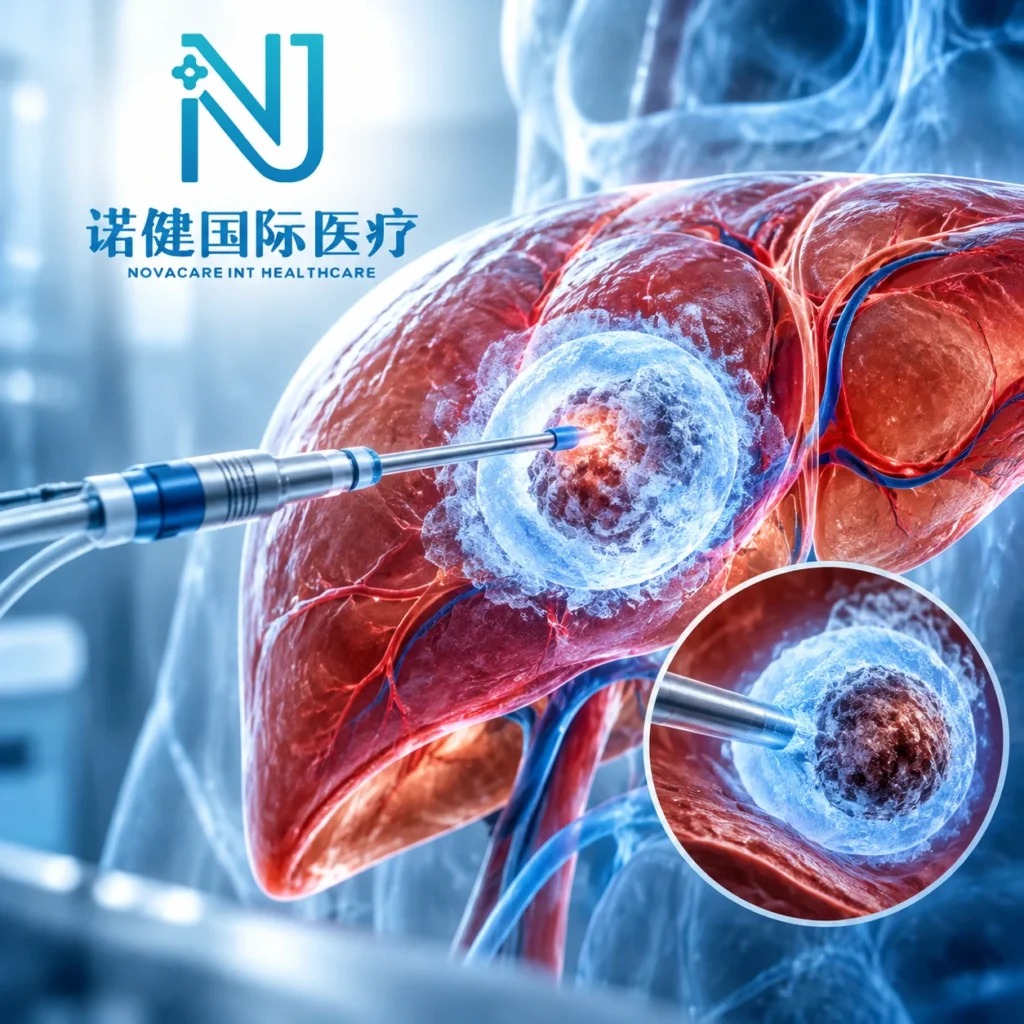
Because the liver filters blood from the entire digestive tract, it is one of the most common organs for cancer to spread to—especially from primary tumors in the colon, breast, and lungs. When a patient is diagnosed with multiple liver metastases, traditional open surgery is often ruled out because removing too many lesions would leave the patient without enough healthy liver tissue to survive.
For patients facing unresectable liver metastases, advanced interventional oncology offers a highly effective, minimally invasive solution: Cryoablation.
1. What is Cryoablation? The Science of Freezing Cancer
Cryoablation (often referred to as Argon-Helium Cryotherapy) is a cutting-edge, image-guided procedure that uses extreme cold to destroy cancer cells.
During the procedure, an interventional oncologist inserts a thin, needle-like probe (cryoprobe) directly into the tumor. The machine then rapidly cycles two different gases:
- The Freezing Phase: High-pressure Argon gas flows through the probe, instantly dropping the temperature at the tip to as low as -160°C. This forms a deadly ice ball that engulfs the tumor. The extreme cold causes razor-sharp ice crystals to form inside the cancer cells, piercing their membranes and severely dehydrating them.
- The Thawing Phase: Next, Helium gas is circulated, rapidly warming the tissue.
This dramatic “Freeze-Thaw Cycle” creates a lethal thermal shock. When the frozen cancer cells thaw rapidly, they swell and burst, leading to complete and irreversible tumor necrosis (death).
2. Why Cryoablation Excels in Treating Multiple Liver Lesions
Compared to traditional heat-based therapies (like radiofrequency or microwave ablation), cryoablation offers distinct clinical advantages for patients with multiple liver metastases:
- The Visible Ice Ball: Unlike heat, which is invisible on standard medical imaging, ice can be seen clearly on a CT scan or ultrasound. This allows the surgeon to watch the ice ball grow in real-time, ensuring it completely covers the tumor while precisely stopping short of damaging adjacent healthy liver tissue or critical blood vessels.
- Multi-Probe Deployment: Cryoablation systems can run several probes simultaneously. If a patient has three or four metastatic tumors scattered across different lobes of the liver, the surgeon can place multiple probes and freeze all the lesions at the exact same time, effectively treating multiple metastases in a single, efficient session.
3. The Dual Benefit: Tumor Destruction and Pain Relief
Advanced liver metastases often stretch the liver capsule, triggering severe, unrelenting abdominal or back pain.
Cryoablation provides a unique dual benefit. Not only does it effectively destroy the tumor mass, but the extreme cold acts as a powerful anesthetic. It interrupts and destroys the local sensory nerve pathways transmitting the pain signals. Many patients wake up from the procedure experiencing significant and immediate palliative pain relief, vastly improving their overall quality of life.
4. Who is the Ideal Candidate for Liver Cryoablation?
Cryoablation is not a replacement for systemic treatments like chemotherapy, but it is an exceptional tool for local disease control. Ideal candidates include:
- Patients with multiple liver metastases who are ineligible for surgical resection.
- Elderly or frail patients who cannot physically tolerate the trauma of open abdominal surgery or general anesthesia.
- Patients whose tumors have stopped responding to targeted therapies or chemotherapy, requiring targeted local intervention to halt disease progression.
5. Accessing Expert Cryoablation Services with Novacare
Performing cryoablation safely and effectively requires highly specialized equipment and world-renowned interventional expertise. Top medical institutions in China, led by internationally recognized experts such as Professor Niu Lizhi and Professor Zhang Jiren, have pioneered the clinical application of cryoablation for complex solid tumors.
Novacare is a dedicated international patient service desk, streamlining access to these world-class precision oncology resources. We assist medical tourism agencies and international patients by organizing DICOM imaging reviews, facilitating multidisciplinary tumor board (MDT) evaluations, and structuring seamless cross-border medical itineraries.
- For Medical Agencies & Partners: Elevate your inbound medical portfolio by partnering with Novacare. Offer your clients access to elite minimally invasive tumor ablation resources when traditional surgery is declined.
- For Patients and Families: Advanced liver metastases require advanced solutions. Contact the Novacare patient desk to submit your recent medical records for a comprehensive cryoablation feasibility review.
Frequently Asked Questions (FAQ)
Q: Is cryoablation performed under general anesthesia?
A: Depending on the size, location, and number of tumors, cryoablation can be performed under local anesthesia with moderate sedation or general anesthesia. Because the procedure is percutaneous (performed through a tiny pinhole in the skin), it is far less traumatic than traditional surgery.
Q: Can cryoablation be combined with chemotherapy or immunotherapy?
A: Absolutely. In fact, it is highly encouraged. Cryoablation provides powerful local control by killing the visible tumors, while systemic treatments like chemotherapy or immunotherapy hunt down microscopic cancer cells circulating in the body. Furthermore, the tumor cell debris left behind after freezing often stimulates a strong immune response, which can enhance the effects of biological immunotherapy.
Q: How long is the hospital stay after liver cryoablation?
A: Recovery is typically very rapid. Most patients experience only mild discomfort or a low-grade fever as the body absorbs the dead tumor tissue. Patients usually remain in the hospital for observation for 2 to 4 days before being safely discharged.
Disclaimer: This article is for educational purposes only and does not constitute medical advice or a treatment guarantee. Eligibility for cryoablation therapy depends entirely on an individual clinical evaluation, liver function status, and review by licensed oncology specialists.