
Why Tumors Recur: Cancer Stem Cells and Immune Evasion Mechanisms
For patients and their families, few moments match the heartbreak of a cancer recurrence. After enduring months of grueling chemotherapy, radiation, or surgery, hearing that a tumor has “returned” or metastasized feels like a cruel betrayal by the body.
To defeat cancer permanently, modern oncology must answer a fundamental question: Why do tumors recur even after achieving clinical remission? The answers lie in two of the most complex survival mechanisms known to biology: Cancer Stem Cells (CSCs) and Tumor Immune Evasion.
1. The Seeds of Relapse: What Are Cancer Stem Cells (CSCs)?
Inside a malignant tumor, not all cancer cells are created equal. Traditional oncology models once assumed that all cells within a tumor shared an equal ability to divide and multiply. We now know that tumors exhibit a strict cellular hierarchy.
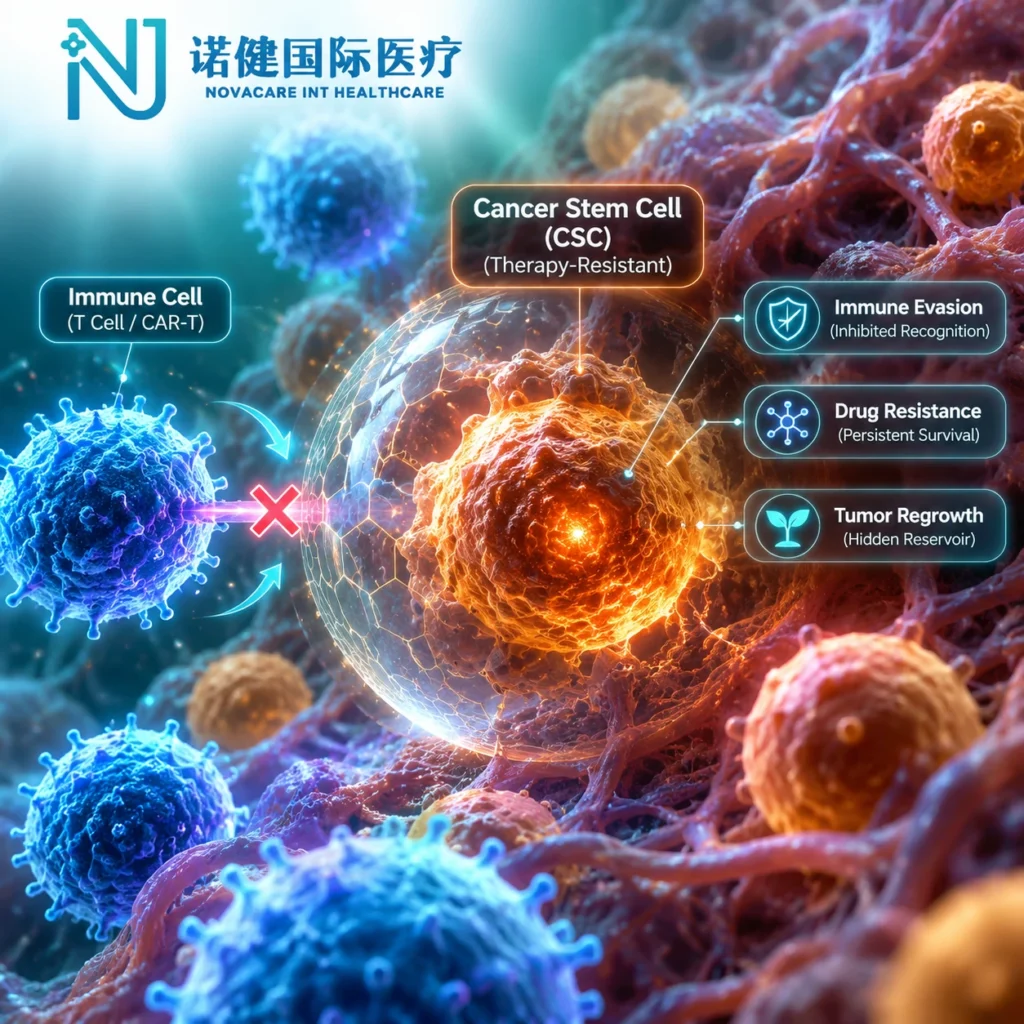
At the very core of this hierarchy are Cancer Stem Cells (CSCs). While they typically make up only a tiny fraction of the total tumor mass, they possess terrifying traits:
- Self-Renewal and Differentiation: CSCs can continuously divide to regenerate the entire heterogeneous population of a tumor, meaning if even a single CSC survives treatment, the tumor can regrow from scratch.
- Therapy Resistance: Standard chemotherapy and external beam radiation are designed to target rapidly dividing cells. CSCs, however, often remain in a slow-cycling or dormant state, effectively hiding from cytotoxic drugs. Furthermore, they are equipped with high levels of DNA repair enzymes and drug-efflux pumps that actively spit poisons back out of their cells.
2. The Accomplice: Tumor Immune Evasion
Even if standard therapies manage to shrink a tumor down to microscopic levels, surviving cancer cells often escape destruction through Immune Evasion.
A healthy immune system uses specialized T-cells and Natural Killer (NK) cells to patrol the body and eliminate abnormal cells. However, surviving cancer cells evolve active evasion tactics:
- Antigen Downregulation: They stop displaying the surface markers that the immune system uses to recognize them, effectively turning off their “I am a threat” badges.
- Building a Hostile Microenvironment: Tumors secrete immunosuppressive signaling molecules (such as TGF-beta, VEGF, and IL-10) and recruit regulatory T-cells (Tregs) that actively paralyze incoming immune cells, creating a physical and chemical fortress.
🏛️ Authoritative Content Construction & Clinical References
To comply with strict medical web governance (Google E-E-A-T / YMYL standards), core insights regarding relapse pathways and tumor microenvironments draw from peer-reviewed oncology literature:
- Nature Reviews Cancer: Definitive academic reviews detailing the plasticity of cancer stem cells and their role in post-treatment minimal residual disease (MRD) persistence.
- Cell Reports & The Lancet Oncology: Clinical translational studies tracking immune checkpoint adaptation, neoantigen loss, and immune evasion kinetics in recurrent solid tumors.
- Precision Oncology Governance: Clinical management frameworks emphasizing multi-modal combination therapies (integrating molecular profiling, microenvironment modification, and adoptive cellular therapy) to eradicate chemo-resistant clones.
🏥 Application Scenario Mapping (Use-Case Layout)
For international patients and medical facilitators navigating cancer recurrence, clinical strategies fall into three primary scenarios:
- The Post-Remission Surveillance Scenario: High-risk patients utilizing advanced circulating tumor DNA (ctDNA) liquid biopsies and multi-omics profiling during remission to catch minimal residual disease (MRD) before radiographic relapse occurs.
- The Multi-Resistant Salvage Scenario: Cases where a localized or oligometastatic recurrence happens after first-line therapies, requiring a pivot from systemic failure to precision local control (such as advanced ablation or targeted re-irradiation).
- The Global Protocol Benchmarking Scenario: Medical agencies assisting families in evaluating second-opinion tumor boards and combination immunotherapy trials designed specifically to overcome treatment-resistant phenotypes.
⚖️ Conventional Treatment vs. Precision Multi-Modal Approach
When managing primary cancer versus a stubborn recurrence, treatment strategies must fundamentally shift:
| Comparison Metric | Standard Primary Treatment (1st-Line) | Precision Recurrence Approach (Salvage / Post-Relapse) |
| Primary Objective | Bulk tumor cytoreduction (maximum shrinkage) | Eradication of cancer stem cells and microenvironment remodeling |
| Diagnostic Depth | Standard histology, staging, and basic imaging | Comprehensive genomic profiling (NGS), liquid biopsy (ctDNA), and immune-phenotyping |
| Therapeutic Modality | Standard protocol-driven chemotherapy, radiation, or surgery | Individualized combination protocols (Immunotherapy + Targeted Agents + Local Ablation) |
| Focus on Resistance | Broad systemic exposure | Overcoming drug efflux pumps, hypoxia, and immune evasion |
Frequently Asked Questions (FAQ)
Q: Does a cancer recurrence mean the original treatment failed?
A: Not necessarily. Initial treatments often successfully eliminate the bulk of the rapidly dividing cancer cells, achieving temporary clinical remission. Recurrence typically happens because a tiny, hidden population of drug-resistant cancer stem cells survived the initial onslaught and slowly regenerated the tumor over time.
Q: How can we prevent cancer from recurring?
A: While absolute prevention is challenging, modern precision oncology focuses heavily on monitoring Minimal Residual Disease (MRD) via blood tests during remission. Maintaining a strong metabolic and immune baseline, coupled with personalized lifestyle interventions and targeted maintenance therapies where indicated, helps minimize relapse risks.
Q: How does Novacare assist patients facing a cancer recurrence?
A: Novacare provides an international patient service desk for families and medical agencies seeking second-opinion precision oncology evaluations. We help structure your updated diagnostic and genetic sequencing files, coordinate multi-disciplinary tumor board (MDT) reviews, and connect you with advanced treatment routes designed to tackle refractory or recurrent malignancies.
Disclaimer: This article is for educational and informational purposes only and does not constitute medical advice or a treatment guarantee. Managing cancer recurrence requires individualized clinical evaluation and comprehensive diagnostic reviews by licensed oncology specialists.