Why International Cancer Patients Are Traveling to China for CAR-T Cell Therapy
For decades, the standard narrative of global medical travel was clear: affluent patients in developing nations who faced a cancer diagnosis would immediately look toward the United States, seeking out world-famous institutions like Mayo Clinic or MD Anderson.
Today, that paradigm is beginning to shift in a fascinating direction. A growing number of cancer patients from wealthy Western nations—including the United States and New Zealand—are boarding long-haul flights to China for advanced oncological care.
What is driving this reversal? The reasons come down to a combination of rapid clinical innovation, expanding approvals, and a stark economic reality.
The Rise of CAR-T in China: Speed and Scale
Chimeric Antigen Receptor T-cell (CAR-T) therapy is one of the most revolutionary breakthroughs in modern oncology. It involves extracting a patient’s own immune cells, genetically reprogramming them in a laboratory to specifically hunt down cancer cells, and reinfusing them back into the body.
While CAR-T technology originated largely in Western research labs, China has rapidly emerged as a powerhouse in its clinical application and commercialization:
- Product Approvals: China has approved multiple domestic CAR-T products, boasting one of the highest numbers of approved cellular immunotherapies globally.
- Solid Tumor Breakthroughs: Beyond traditional blood cancers like leukemia and lymphoma, recent regulatory milestones—such as the approval of products targeting solid tumors like advanced gastric cancer (CLDN18.2)—have pushed open doors that were previously considered closed.
A Real-World Example: Cross-Border Medical Travel Reversal
The changing tide is best illustrated by individual cases. Recently, a 59-year-old patient from New Zealand diagnosed with advanced gastrointestinal cancer exhausted standard chemotherapy and immunotherapy options in his home country.
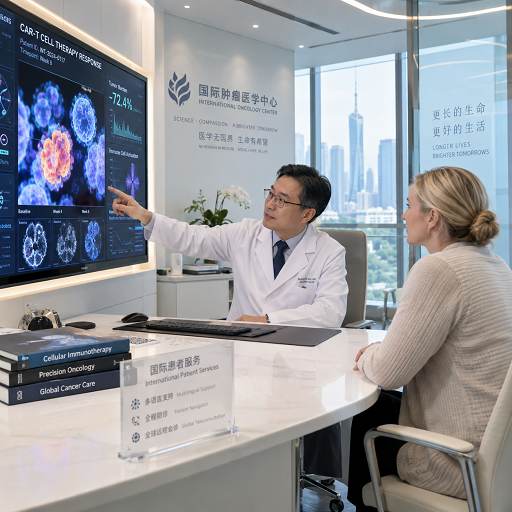
Instead of looking toward traditional Western hubs, he chose an international oncology center in China. He underwent cell collection, received his specialized CAR-T infusion, and successfully completed treatment before returning home.
This marks a profound shift: instead of asking “What treatment can I find abroad that my country lacks?” international patients are beginning to ask, “Where is the cutting-edge therapy actually accessible and operational right now?”
The Economics: Balancing Cost and Access
CAR-T is not a standard pharmaceutical drug; it is a highly customized, labor-intensive biological manufacturing process. Every single dose is custom-built for an individual patient, involving cell harvesting, genetic modification, expansion, rigorous quality control, and inpatient monitoring.
In the United States, comprehensive CAR-T treatment packages—including drug costs, specialized hospitalization, and post-infusion monitoring—can range from $550,000 to over $850,000, according to data cited from major cancer centers.
In contrast, similar advanced pathways in China generally range between $150,000 and $230,000. While still a significant financial commitment, the hundreds of thousands of dollars in savings—coupled with immediate access to approved clinical pathways—make a compelling case for international patients.
Building a Global Service Ecosystem in China
Major medical hubs in China are actively building out a comprehensive international healthcare infrastructure. With numerous public and private medical institutions approved for international medical tourism, these centers are addressing the traditional hurdles that worry overseas patients:
- Bilingual Medical Desks: Overcoming language barriers with professional English-speaking coordinators.
- Seamless Medical Records: Streamlining DICOM imaging, pathology reports, and clinical history transfer.
- Post-Treatment Continuity: Establishing direct communication bridges between Chinese specialists and the patient’s local home-country doctors for long-term follow-up.
The Bigger Picture for Global Healthcare
This trend does not mean China has instantly replaced Western medical science as a whole. Western institutions still hold deep foundational research capabilities and extensive clinical trial pipelines.
However, it signals a structural shift in global life sciences. When a nation manages to combine rapid clinical translation, efficient manufacturing ecosystems, lower cost structures, and international-grade hospital service standards, the global healthcare map inevitably redraws itself.
For global medical tourism facilitators and international patients alike, advanced medical centers in China are no longer just regional options—they have become global destinations for the future of cellular immunotherapy.
Disclaimer: This article is for informational purposes only and does not constitute medical advice or a treatment guarantee. Eligibility for CAR-T cell therapy depends entirely on individual clinical evaluation by licensed medical specialists.