Pharmacogenomics: How Genetic Testing Prevents Adverse Drug Reactions and Optimizes Medicine
For decades, the standard practice of clinical medicine has relied heavily on a generalized, “one-size-fits-all” model. When a patient falls ill, a physician prescribes a standard dose of a medication based on average population weights and statistics. If the drug works without major side effects, the treatment continues. If it fails or triggers severe toxicity, the doctor plays a game of clinical trial and error, switching dosages or trying an entirely different drug.
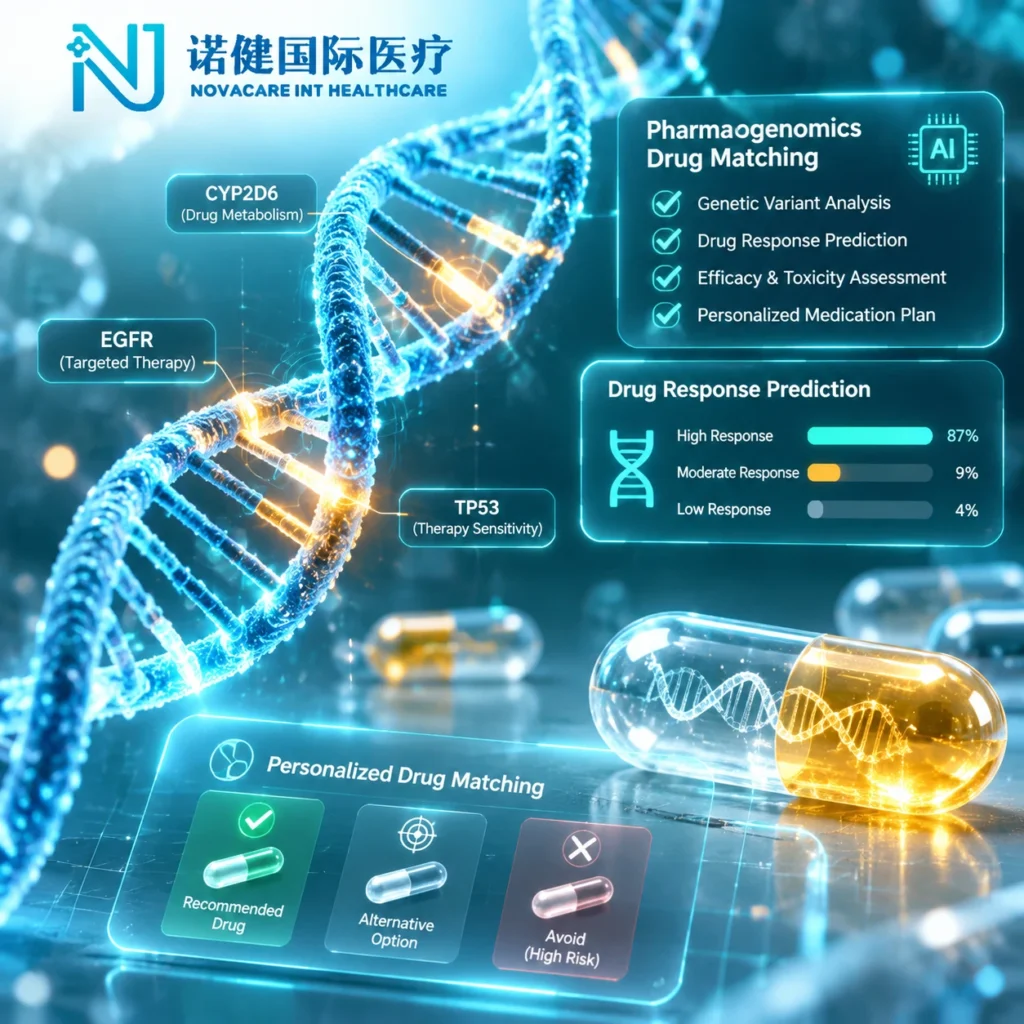
For millions of patients, this trial-and-error approach is not only inefficient—it is dangerous. Adverse Drug Reactions (ADRs) account for a staggering number of hospitalizations and medical complications worldwide. Fortunately, the emergence of Pharmacogenomics (PGx) is revolutionizing prescription safety by using genetic testing to predict how an individual’s unique DNA will react to specific pharmaceuticals before a single pill is swallowed.
1. What is Pharmacogenomics? Decoding DNA and Drug Metabolism
Pharmacogenomics is the intersection of pharmacology (the study of drugs) and genomics (the study of genes). It examines how your genetic makeup alters your body’s response to therapeutic compounds.
The primary engine of drug metabolism in the human body is the liver, specifically a family of enzymes known as the Cytochrome P450 (CYP450) system. Genes dictate how rapidly or sluggishly these enzymes are produced and how efficiently they break down chemical substances. Because genetic variations (polymorphisms) differ from person to person, two individuals can take the exact same prescription drug and experience entirely opposite results.
2. The Hidden Danger: Adverse Drug Reactions and Metabolic Types
Based on your genetic profile concerning specific CYP450 enzymes (such as CYP2C19, CYP2D6, or CYP3A4), pharmacogenomic testing categorizes your metabolic response into distinct groups:
- Poor Metabolizers: Individuals who break down drugs far too slowly. As a result, the medication accumulates in the bloodstream, reaching toxic levels and triggering severe adverse drug reactions even at standard doses.
- Ultra-Rapid Metabolizers: Individuals who metabolize drugs with excessive speed. The medication is broken down and eliminated from the body before it ever has a chance to work, rendering standard treatments completely ineffective.
Whether dealing with cardiovascular blood thinners, psychiatric medications, or complex cancer targeted therapies, matching the drug to your true metabolic phenotype is the ultimate definition of precision medicine.
🏛️ Authoritative Content Construction & Clinical References
To comply with strict medical web governance (Google E-E-A-T / YMYL standards), clinical perspectives on pharmacogenomics and prescription safety draw from leading medical institutions and global genomic consortia:
- The Clinical Pharmacogenetics Implementation Consortium (CPIC): The premier international authority providing peer-reviewed, evidence-based guidelines on how specific gene-drug pairs should be translated into actionable clinical practice.
- The U.S. Food and Drug Administration (FDA): Official FDA labeling frameworks that list mandatory or recommended pharmacogenomic biomarker testing requirements prior to administering specific oncology and systemic medications.
- Precision Medicine Governance: Clinical protocols utilized by advanced executive health centers, integrating multi-gene PGx panels to eliminate drug toxicity in multi-medication management.
🏥 Application Scenario Mapping (Use-Case Layout)
For international patients, chronic disease managers, and medical tourism facilitators, pharmacogenomic testing serves three distinct operational scenarios:
- The Multi-Medication Chronic Management Scenario: Elderly or multi-morbid patients taking several prescription drugs simultaneously, utilizing PGx testing to eliminate drug-drug interactions and unexpected toxicities.
- The Precision Oncology Safety Scenario: Cancer patients preparing for complex targeted therapy or immunotherapy regimens, utilizing genetic profiling to ensure optimal drug absorption and minimal organ damage.
- The Global B2B Wellness Portfolio Scenario: International medical agencies looking to bundle accredited pharmacogenomic screening panels into high-end executive health checkup packages for discerning global clients.
⚖️ Standard Trial-and-Error Prescribing vs. Pharmacogenomic-Guided Medicine
To appreciate the clinical value of DNA-based medication management, consider the operational contrast between traditional prescribing and PGx optimization:
| Comparison Metric | Traditional Trial-and-Error Prescribing | Pharmacogenomic (PGx) Guided Medicine |
| Selection Logic | Population averages, standard weight/age formulas, and empirical physician experience | Individualized genetic phenotype mapping (CYP450 enzyme profiling) |
| Risk of Toxicity | High (Discovered reactively after adverse side effects manifest) | Low (Proactively predicted and avoided before administration) |
| Time to Effective Dose | Extended (Involves multiple medication switches and dosage adjustments) | Accelerated (Directly prescribes the correct drug and starting dose) |
| Clinical Application | Reactive symptom management | Predictive, personalized prevention and safety optimization |
Frequently Asked Questions (FAQ)
Q: Do I need to repeat a pharmacogenomic test if my health changes?
A: Generally, no. Your core genetic makeup regarding drug-metabolizing enzymes (such as your inherited CYP450 profile) remains constant throughout your life. A comprehensive PGx test performed once provides a lifelong reference asset that you and any future physician can use whenever new medications are prescribed.
Q: Can pharmacogenomics completely eliminate all side effects?
A: No. While PGx testing is remarkably effective at preventing severe adverse drug reactions caused by abnormal metabolic processing or genetic toxicity risks, it cannot prevent every minor, secondary side effect inherent to a drug’s chemical nature. It is a powerful safety optimization tool, not an absolute shield against minor discomforts.
Q: How does Novacare assist international clients with pharmacogenomic testing?
A: Novacare assists global clients and B2B medical agencies by facilitating compliant sample collections, partnering with accredited molecular laboratories, and arranging expert-led clinical pharmacist or physician consultations to translate complex genetic reports into practical, actionable prescription guidelines.
Disclaimer: This article is for educational and informational purposes only and does not constitute medical advice or a clinical prescription adjustment. Altering, stopping, or starting any medication regimen must be done strictly under the supervision of a licensed physician.