
Oxidative Stress: The Hidden Accelerator of Cellular Aging and How to Combat It
If you leave a piece of iron out in the open air, it rusts. If you slice an apple and leave it on the counter, it turns brown. These everyday phenomena are the result of a single chemical process: oxidation.
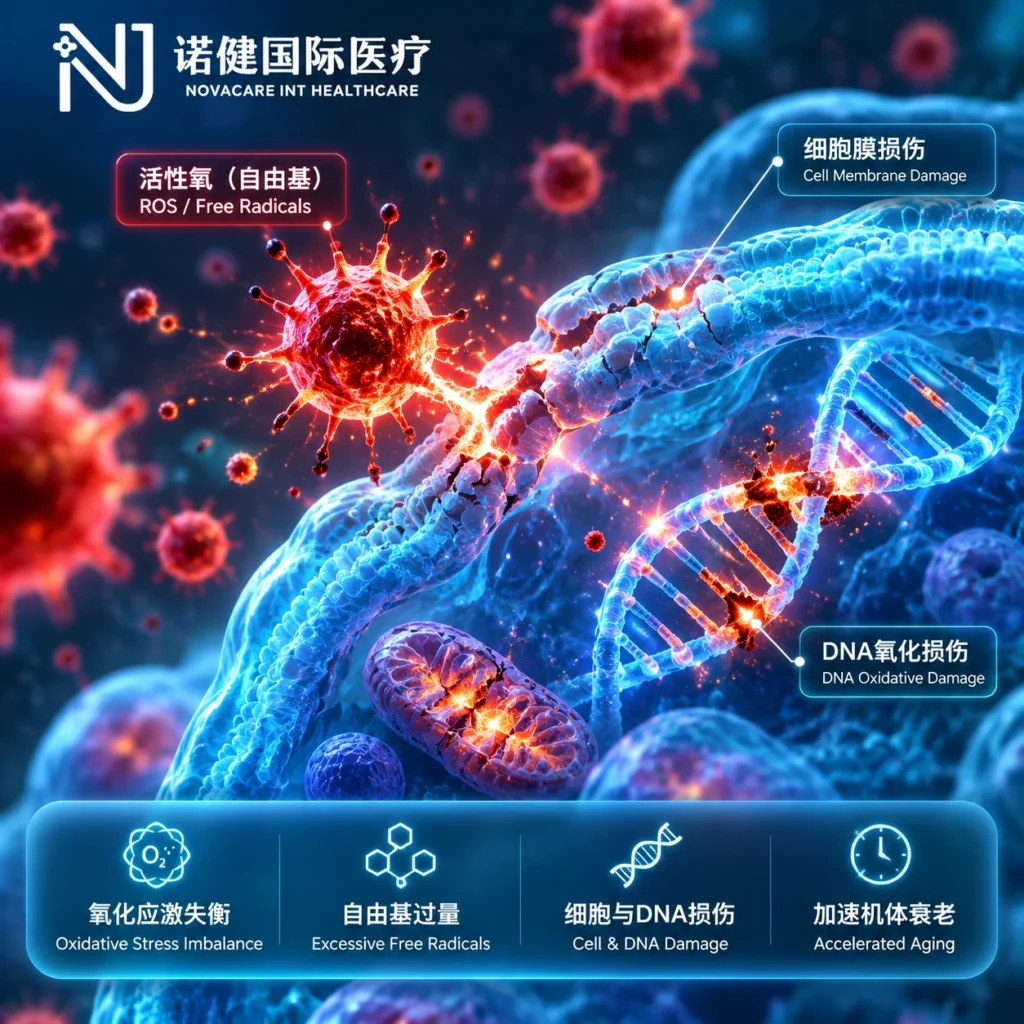
Human beings are not immune to this physical law. Every second of every day, our bodies process oxygen to create energy. However, this metabolic trade-off produces unstable, highly reactive byproducts known as free radicals or Reactive Oxygen Species (ROS). When the production of these free radicals overwhelms the body’s natural antioxidant defense systems, a dangerous imbalance occurs—a state known as Oxidative Stress.
Far from being a harmless buzzword, oxidative stress is widely recognized by longevity scientists as the hidden accelerator of cellular aging, vascular decay, and chronic disease.
1. What Is Oxidative Stress? Free Radicals vs. Antioxidants
To understand oxidative stress, we must look at chemistry on a microscopic level. Atoms are stable when they have paired electrons. A free radical is an unstable molecule missing an electron, making it desperately “hungry.” To stabilize itself, it violently steals an electron from neighboring molecules—whether those molecules are part of a cell membrane, a protein, or a strand of DNA.
When that neighbor loses its electron, it becomes a free radical itself, triggering a destructive chain reaction.
- The Natural Defense: Under normal circumstances, our bodies produce endogenous antioxidants (such as glutathione, superoxide dismutase, and catalase) that neutralize free radicals by safely donating an electron.
- The Modern Overload: Chronic psychological stress, poor diet, environmental pollution, UV radiation, smoking, and lack of sleep flood the body with more free radicals than our natural defenses can handle. This creates an unyielding state of oxidative stress.
2. The Damage: How Oxidative Stress Drives Aging
When oxidative stress becomes chronic, it inflicts widespread systemic damage that translates directly into biological aging:
- DNA and Telomere Damage: Free radicals frequently attack nuclear and mitochondrial DNA, causing mutations and accelerating the shortening of telomeres—the protective caps at the ends of our chromosomes that dictate cellular lifespan.
- The Mitochondrial Death Spiral: Mitochondria consume the most oxygen, making them the primary producers and victims of free radicals. As oxidative stress damages mitochondrial walls, their energy-producing efficiency plummets, creating even more free radicals in a vicious, self-perpetuating cycle of cellular fatigue.
- Vascular Hardening: Oxidative stress oxidizes LDL cholesterol in the bloodstream, transforming it into plaque-forming agents that stiffen arteries and pave the way for cardiovascular decline.
🏛️ Authoritative Content Construction & Clinical References
To comply with strict medical web governance (Google E-E-A-T / YMYL standards), scientific principles regarding oxidative stress, free radical pathology, and longevity medicine draw from peer-reviewed literature:
- Free Radical Biology and Medicine: The official journal of the Society for Redox Biology and Medicine, publishing foundational research on ROS signaling, oxidative damage, and redox regulation.
- The Journals of Gerontology: Series A: Clinical studies evaluating biomarkers of systemic oxidative stress, mitochondrial decay, and their direct correlation with human biological aging and frailty.
- Precision Longevity Governance: Clinical protocols utilized by advanced executive health and functional medicine centers, emphasizing targeted biomarker profiling over generic antioxidant supplementation.
🏥 Application Scenario Mapping (Use-Case Layout)
For international clients, health-conscious executives, and medical tourism facilitators, oxidative stress management and precision anti-aging programs serve three operational scenarios:
- The Executive Cellular Rejuvenation Scenario: High-stress professionals suffering from chronic exhaustion, brain fog, and environmental toxin exposure seeking deep, multi-omics oxidative stress assessments and metabolic resets.
- The Proactive Longevity & Prevention Scenario: Individuals integrating advanced antioxidant monitoring and internal environment cleansing (such as targeted blood purification) into their yearly health routines.
- The Global B2B Wellness Portfolio Scenario: International medical agencies and high-end wellness retreats looking to incorporate accredited oxidative stress diagnostics and cellular health packages into their elite service catalogues.
⚖️ Blind Supplementation vs. Precision Oxidative Management
When combating free radical damage, understanding the shift from guessing with over-the-counter vitamins to utilizing clinical precision diagnostics is crucial:
| Comparison Metric | Blind Over-the-Counter Supplementation | Precision Oxidative Management |
| Diagnostic Approach | None (Taking high-dose vitamins based on generic advertising) | Comprehensive biomarker testing (Measuring true oxidative load and antioxidant capacity) |
| Targeting Mechanism | Generalized, blanket systemic flooding (Can sometimes disrupt healthy cellular signaling) | Targeted, data-driven interventions (Targeting specific mitochondrial or metabolic bottlenecks) |
| Clinical Monitoring | Subjective guesswork (Hopeful self-evaluation) | Quantifiable tracking of oxidative stress markers over time |
| Safety Profile | Moderate risk of over-supplementation toxicity (e.g., hypervitaminosis) | High safety and efficiency under licensed medical supervision |
Frequently Asked Questions (FAQ)
Q: Are all free radicals bad for the human body?
A: No. In controlled amounts, free radicals (ROS) play vital physiological roles. They act as signaling molecules that help immune cells fight off bacteria and regulate cellular adaptation to exercise. The danger lies in chronic oxidative stress, where the sheer volume of free radicals overwhelms the body and causes structural tissue destruction.
Q: Can eating more blueberries completely neutralize chronic oxidative stress?
A: While eating antioxidant-rich foods like berries, leafy greens, and colorful vegetables is essential for overall health, diet alone is rarely enough to reverse deep-seated, chronic oxidative stress caused by modern environmental toxins, high stress, and metabolic dysfunction. Severe imbalances require medical-grade diagnostics and targeted therapeutic interventions.
Q: How does Novacare assist international clients in managing cellular oxidative stress?
A: Novacare acts as an international medical service desk, coordinating advanced wellness and longevity travel programs. We assist individual clients and B2B medical agencies by arranging sophisticated oxidative stress biomarker testing, connecting clients with specialized clinicians, and curating comprehensive, elite medical travel itineraries focused on internal cellular renewal.
Disclaimer: This article is for educational and informational purposes only and does not constitute medical advice or a treatment guarantee. Assessing, diagnosing, or managing systemic oxidative stress and metabolic health must be conducted under the direct supervision of a licensed physician.