Cancer Psychological and Nutritional Support: Why They Are the “Invisible Treatment”
When a family receives a cancer diagnosis, attention immediately shifts to the heavy artillery of modern medicine: identifying top-tier hospitals, securing advanced molecular targeted pills, scheduling multi-million-dollar cellular immunotherapies, or evaluating precision ablation and proton beams.
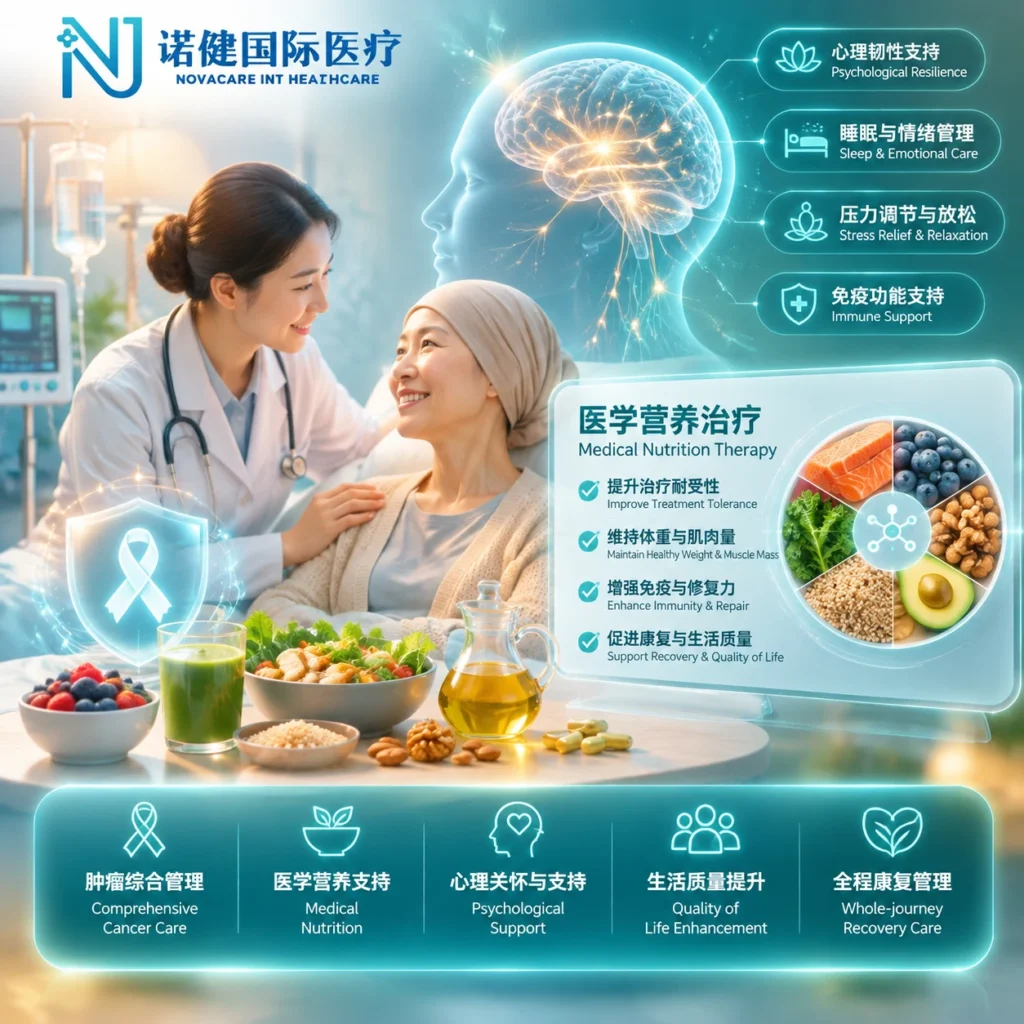
Yet, as clinical oncologists frequently observe, two patients with identical genetic profiles, receiving the exact same state-of-the-art treatment protocol, can experience completely different outcomes. Why? Because the war against cancer is not fought by drugs alone. Behind every successful clinical intervention lies a powerful, yet chronically overlooked force: the “invisible treatment”—comprehensive medical nutrition therapy (MNT) and psycho-oncology intervention.
1. The Silent Threat: Understanding Cancer Cachexia
One of the most devastating complications in advanced oncology is cancer cachexia—a wasting syndrome characterized by severe muscle loss, profound fatigue, and involuntary weight loss.
- The Metabolic Trap: Cancer is a metabolic parasite. Tumors aggressively hijack the body’s energy pathways, driving up systemic inflammation while simultaneously inducing severe loss of appetite (anorexia).
- Treatment Intolerance: When a patient suffers from severe cachexia, their physical reserve collapses. Consequently, they become too weak to tolerate high-intensity therapies like chemotherapy, radiation, or CAR-T cell infusions, forcing doctors to reduce doses or halt treatment entirely. Medical nutrition therapy acts as the physiological shield that preserves physical resilience.
2. The Mind-Body Connection: How Psychological Distress Sabotages Recovery
A cancer diagnosis triggers an earthquake of psychological trauma, introducing intense fear, anxiety, and depression. Far from being “just emotional,” chronic psychological distress has a direct, measurable impact on human biology:
- Neuroendocrine Suppression: High levels of chronic psychological stress trigger the continuous release of stress hormones like cortisol and adrenaline. Prolonged elevation of these hormones suppresses natural killer (NK) cell activity and dampens overall immune surveillance.
- Behavioral Compliance: Severe depression often leads to treatment non-compliance, social withdrawal, and a refusal to eat or engage in rehabilitation. Psycho-oncology bridges this gap, rebuilding a patient’s mental fortitude and active participation in their healing journey.
🏛️ Authoritative Content Construction & Clinical References
To comply with strict medical web governance (Google E-E-A-T / YMYL standards), clinical perspectives on psycho-oncology, nutritional support, and cachexia management draw from premier global institutions:
- The European Society for Clinical Nutrition and Metabolism (ESPEN): Evidence-based guidelines outlining the absolute necessity of early medical nutrition therapy in cancer care to prevent malnutrition and improve survival.
- Psycho-Oncology (The Official Journal of the International Psycho-Oncology Society): Peer-reviewed research establishing cognitive behavioral therapy (CBT) and emotional support as vital components that enhance patient compliance and quality of life.
- Precision Holistic Care Governance: Clinical frameworks implemented by advanced international oncology centers, ensuring that nutritional and psychological support runs parallel to heavy clinical interventions.
🏥 Application Scenario Mapping (Use-Case Layout)
For international patients, families, and medical tourism facilitators, comprehensive nutritional and psychological oncology programs serve three operational scenarios:
- The Pre-Treatment Conditioning Scenario: Patients preparing for grueling treatments (such as stem cell transplants or intensive surgery) utilizing specialized nutritional protocols to build up maximum physical reserves.
- The Post-Diagnosis Trauma Scenario: Newly diagnosed individuals and families struggling with overwhelming psychological shock, utilizing psycho-oncology counseling to regain emotional stability and decision-making clarity.
- The Global B2B Comprehensive Care Portfolio Scenario: International medical agencies looking to partner with institutions that provide fully integrated, holistic care packages rather than pure, isolated clinical interventions.
⚖️ Fragmented Clinical Care vs. Holistic Integrated Oncology
When navigating complex cancer treatments, understanding the vast difference between isolated drug administration and holistic multidisciplinary care is vital:
| Comparison Metric | Fragmented Clinical Care (Drugs Only) | Holistic Integrated Oncology Care |
| Primary Focus | Eradicating the tumor via pharmaceuticals, surgery, or radiation | Eradicating the tumor while aggressively protecting the whole patient |
| Nutritional Management | Reactive (Addressed only after severe weight loss or starvation occurs) | Proactive (Continuous, customized medical nutrition therapy from day one) |
| Psychological Support | Optional or neglected (Leaves emotional distress unaddressed) | Core pillar (Active psycho-oncology intervention and emotional resilience coaching) |
| Treatment Completion Rate | Lower (Higher rates of dose reductions or treatment abandonment due to toxicity) | Higher (Better physical and mental resilience allows completion of optimal protocols) |
Frequently Asked Questions (FAQ)
Q: Can a standard healthy diet prevent cancer cachexia once it begins?
A: Usually, no. Cancer cachexia is a complex metabolic disorder driven by systemic inflammation and tumor-induced metabolic rewiring. Simply eating more standard food or forcing calories is rarely effective because the body cannot process them normally. It requires specialized Medical Nutrition Therapy (MNT)—formulated with specific anti-inflammatory ratios, amino acids, and metabolic supports—administered under clinical guidance.
Q: Is psychological counseling really capable of affecting physical cancer recovery?
A: Yes. While counseling does not magically shrink a tumor on its own, it directly impacts the biological environment in which the tumor lives. By lowering chronic stress hormones, improving sleep, and enhancing immune competence, psychological support creates a much more resilient internal environment that can better withstand and respond to medical therapies.
Q: How does Novacare integrate holistic support into international cancer referrals?
A: Novacare views international oncology referral as a comprehensive journey rather than a single transaction. When coordinating cross-border medical travel for advanced therapies, we assist individual clients and B2B medical agencies by ensuring that receiving hospitals provide integrated multidisciplinary care, including clinical nutrition planning and supportive patient-desk assistance throughout the stay.
Disclaimer: This article is for educational and informational purposes only and does not constitute medical advice, a nutritional prescription, or a treatment guarantee. Managing cancer nutrition, cachexia, and psychological health must be performed under the direct supervision of licensed clinical specialists and oncologists.