
Interventional Oncology for Liver Cancer: Embolization and Patient Suitability
A diagnosis of primary liver cancer (Hepatocellular Carcinoma, or HCC) or liver metastasis can be incredibly daunting, particularly when a patient is told that their tumor is “unresectable.” For many patients, traditional open surgery is not an option because the tumor is too large, located dangerously close to major blood vessels, or because the patient suffers from underlying liver cirrhosis that makes surgery too risky.
However, being ineligible for surgery does not mean being out of options. The rapidly advancing field of interventional oncology for liver cancer offers a highly effective, minimally invasive lifeline.
1. What is Interventional Oncology?
Interventional oncology is a specialized branch of modern precision medicine that merges advanced medical imaging (such as CT scans, MRI, and fluoroscopy) with minimally invasive catheter-based techniques. Instead of making large surgical incisions, interventional oncologists use these real-time images to “navigate” tiny instruments through the body’s vascular system, delivering treatment directly inside the tumor.
2. The Principle of Embolization: Starving the Tumor
To understand how interventional oncology effectively treats liver cancer, we must look at the liver’s unique biology.
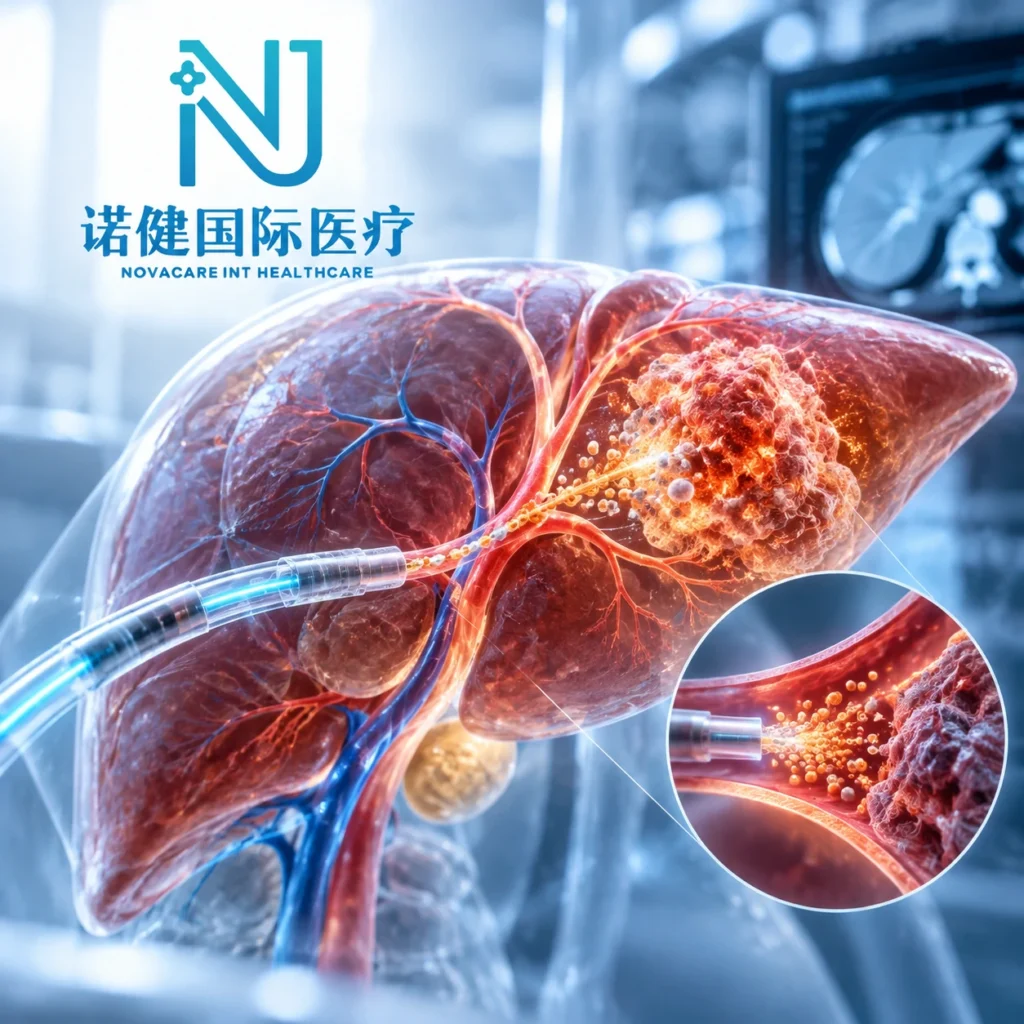
The liver has a dual blood supply. Healthy liver tissue receives most of its blood from the portal vein. However, liver tumors are exceptionally greedy—they derive almost 100% of their blood supply from the hepatic artery. Interventional oncology exploits this specific biological vulnerability through a procedure called Embolization (most commonly TACE – Transarterial Chemoembolization).
- The Delivery: A specialist inserts a microscopic catheter into an artery in the groin or wrist and threads it directly into the hepatic artery supplying the tumor.
- The “Double Hit”: Once in position, a highly concentrated dose of chemotherapy is injected directly into the tumor. Immediately following the chemotherapy, tiny synthetic particles (embolic agents) are injected to block or “plug” the artery.
- The Result: The tumor is simultaneously poisoned by the localized chemotherapy and starved of oxygen and nutrients because its blood supply has been cut off. Meanwhile, the healthy liver tissue continues to survive normally via the portal vein.
3. Who is a Candidate for Liver Cancer Interventional Oncology?
Interventional oncology is not a one-size-fits-all solution, but it is the gold standard for specific clinical profiles. The best candidates include:
- Patients with Unresectable HCC: Individuals with primary liver cancer that cannot be surgically removed due to tumor location, size, or poor overall liver function.
- Patients with Liver Metastases: Individuals whose cancer has spread to the liver from another primary site, such as the colon, breast, or neuroendocrine system.
- Patients Needing “Downstaging”: Sometimes, a tumor is slightly too large for a patient to qualify for surgery or a liver transplant. Embolization can be used to shrink the tumor (downstaging), effectively bridging the patient to a curative surgical option.
4. The Advantages of Image-Guided Vascular Therapy
Compared to traditional systemic treatments or open surgery, interventional oncology offers profound benefits:
- Minimally Invasive: The entire procedure is performed through a 2-millimeter pinhole in the skin. There are no large incisions and no stitches required.
- Localized Treatment: Because the chemotherapy is trapped inside the tumor, the heavy, systemic side effects typically associated with traditional IV chemotherapy (like severe hair loss or extreme immune suppression) are significantly reduced.
- Repeatable and Liver-Preserving: The procedure can be repeated if new tumors develop, and it is highly effective at preserving the remaining healthy liver function.
5. Interventional Oncology Consultation with Novacare
Performing successful embolization procedures requires sophisticated angiographic imaging equipment and highly experienced interventional teams.
Novacare serves as a vital bridge for international patients and global medical facilitators seeking top-tier interventional oncology resources in China. We support international agencies by structuring complex clinical records—such as DICOM imaging files, liver function tests, and pathology reports—to ensure that leading interventional specialists can conduct accurate remote evaluations before any travel decisions are made.
- For Medical Agencies & Partners: Expand your inbound medical service capabilities by partnering with Novacare to provide specialized interventional oncology referral pathways.
- For Patients and Families: If you have been told your liver tumor is inoperable, contact our patient desk to submit your imaging for a structured interventional oncology review.
Frequently Asked Questions (FAQ)
Q: Is liver embolization (TACE) a painful procedure?
A: The procedure itself is performed under moderate sedation and local anesthesia, so patients do not feel the catheter moving through the blood vessels. However, after the tumor’s blood supply is blocked, it is common to experience “Post-Embolization Syndrome” (mild to moderate abdominal pain, fatigue, and a low-grade fever) for a few days as the tumor tissue breaks down. This is managed effectively with standard medications.
Q: Can interventional oncology completely cure liver cancer?
A: While embolization is incredibly effective at shrinking tumors, halting their growth, and extending survival, it is generally considered a palliative or disease-controlling treatment rather than a definitive cure. However, in cases where it shrinks the tumor enough to allow for subsequent surgery or a liver transplant, it plays a critical role in the curative pathway.
Q: How long is the hospital stay for an embolization procedure?
A: Because it is a minimally invasive procedure, recovery is rapid. Most patients are required to lie flat for a few hours immediately after the procedure to prevent bleeding at the catheter insertion site, and they typically remain in the hospital for just 1 to 2 days for observation before being discharged.
Disclaimer: This article is for educational purposes only and does not constitute a treatment guarantee or medical advice. The suitability for interventional oncology and embolization depends entirely on individual clinical evaluation, liver function status, and review by licensed medical specialists.