肺动脉高压能逆转吗?干细胞治疗的作用
For patients diagnosed with Pulmonary Arterial Hypertension (PAH), one of the most pressing and devastating questions is: Can pulmonary hypertension be reversed?
Historically, mainstream medicine has categorized pulmonary hypertension as an irreversible, progressive condition. Once the blood vessels in the lungs become stiff, narrowed, and thickened, the right side of the heart is forced into a relentless battle that eventually leads to right heart failure. However, recent breakthroughs in regenerative medicine—specifically Pulmonary hypertension stem cell therapy—are beginning to challenge this grim prognosis, offering a new frontier of hope for vascular repair.
1. The Bottleneck of Conventional PAH Treatments
To understand why stem cells are revolutionary, we must look at the limitations of current standard-of-care treatments.
Conventional therapies primarily consist of targeted vasodilators (medications that open up blood vessels). While these drugs are life-saving and highly effective at lowering pulmonary pressure and relieving symptoms like shortness of breath, they face a critical bottleneck: they manage the disease but do not cure it. They cannot undo the structural thickening of the pulmonary artery walls—a process known as vascular remodeling. As the disease progresses, patients often reach a clinical ceiling where medications lose their efficacy.
2. What Are Mesenchymal Stem Cells (MSCs)?
Mesenchymal Stem Cells (MSCs) are multipotent adult stem cells that can be ethically sourced from tissues such as the umbilical cord, bone marrow, or adipose (fat) tissue.
Unlike standard chemical drugs, MSCs are “living” therapies. They are highly valued in regenerative medicine for their unique ability to migrate directly to sites of tissue injury, modulate hyperactive immune systems, and stimulate the body’s intrinsic healing processes without causing severe rejection reactions.
3. How Stem Cell Therapy Targets Pulmonary Hypertension
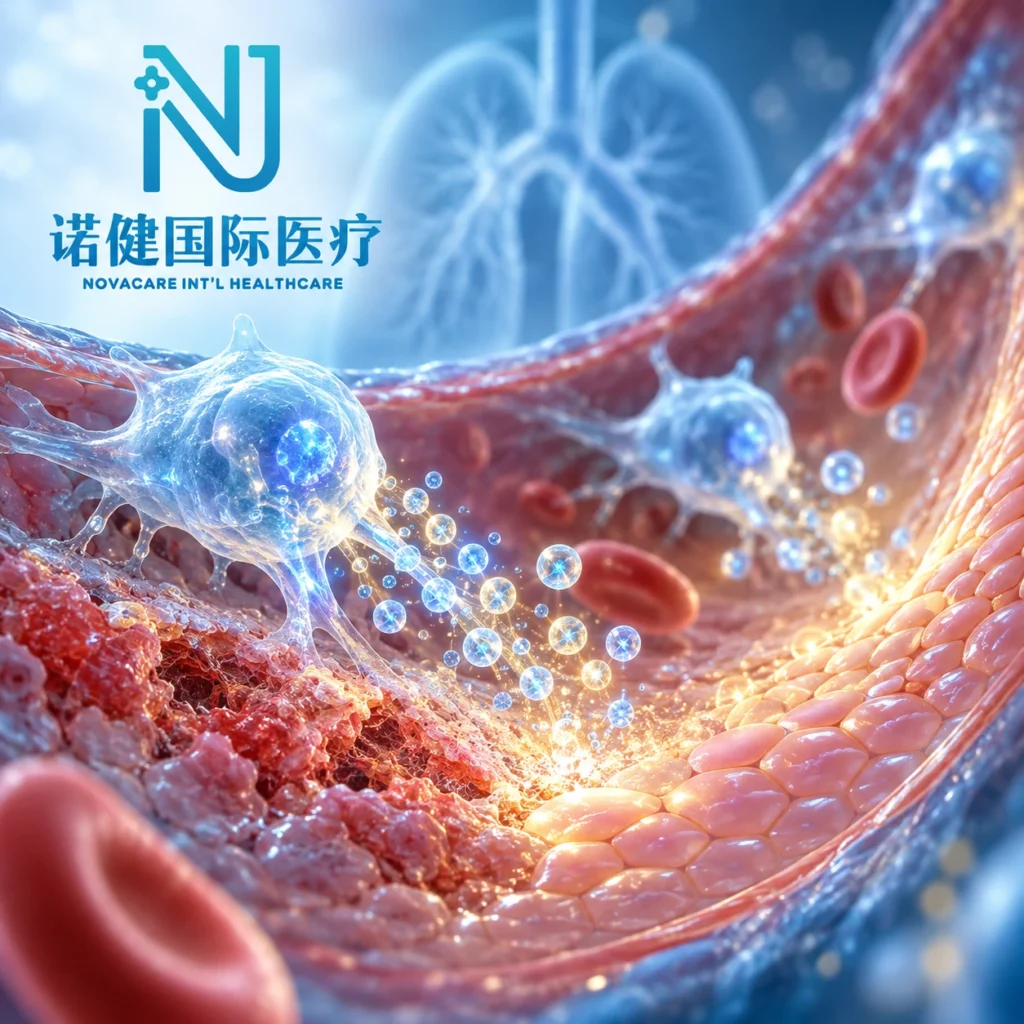
When introduced into the body of a patient with PAH, MSCs act as microscopic repair engineers targeting the damaged pulmonary vasculature through several key mechanisms:
- Endothelial Repair: The core issue in PAH is the dysfunction of the endothelium (the inner lining of the blood vessels) and the aggressive overgrowth of smooth muscle cells. MSCs help reverse this process by promoting the regeneration of healthy endothelial cells and halting the abnormal proliferation of muscle tissue.
- The Paracrine Effect: MSCs do not just physically replace damaged cells; they act as cellular factories. They secrete a rich cocktail of growth factors, cytokines, and exosomes (tiny cellular vesicles) that instruct the surrounding diseased lung tissues to heal themselves and encourage the formation of healthy new micro-vessels (angiogenesis).
- Immunomodulation: Chronic localized inflammation in the lungs drives the progression of PAH. MSCs possess powerful anti-inflammatory properties that quiet down the rogue immune cells attacking the pulmonary vessels, thereby stopping the vicious cycle of vascular scarring.
4. Latest Clinical Progress: What Does the Research Say?
While it is scientifically premature to claim a guaranteed “cure,” international clinical studies and compassionate use trials regarding MSC therapy for PAH have reported highly encouraging data.
Observations in selected patient cohorts have demonstrated notable improvements in the 6-Minute Walk Distance (6MWD)—a standard clinical measure of physical endurance. Furthermore, advanced imaging has shown stabilization or reduction in right ventricular strain, alongside significant improvements in overall quality of life, energy levels, and reduced reliance on continuous oxygen therapy.
5. Accessing Cell Therapy Wellness Programs with Novacare
Because regenerative medicine is at the absolute cutting edge of biomedical science, accessing standardized, high-quality MSC therapies requires careful clinical coordination and institutional access.
Novacare is a professional international medical service desk bridging the gap between global patients and top-tier cellular therapy resources in China. We support international medical tourism agencies and patients by structuring complex medical records, facilitating specialist reviews, and arranging comprehensive medical travel itineraries.
- For Medical Agencies: Differentiate your inbound medical service portfolio by partnering with Novacare to provide your clients with institutional-grade cell therapy access.
- For Patients: Send your latest echocardiogram, right heart catheterization reports, and clinical history to our patient desk to determine if a cellular wellness route is the appropriate next step for your cardiopulmonary health.
Disclaimer: This article is for informational and educational purposes only and does not constitute a treatment guarantee or medical advice. The phrase “reversed” refers to ongoing clinical research into vascular remodeling. The suitability, safety, and clinical pathway of stem cell therapy must be rigorously evaluated by licensed physicians based on individual medical records.